Thomas MoreSaint · 1478–1535Thomas More was a prominent 16th-century English statesman, lawyer, and humanist who served as Lord Chancellor under King Henry VIII. A scholar of significant repute, he authored the influential work *Utopia*, which explored the concept of an ideal island society. Despite his high political standing, More remained a devout Catholic, eventually facing execution at Tower Hill after refusing to acknowledge the King as the supreme head of the Church of England. His refusal to swear the Oath of Supremacy led to a conviction for treason, resulting in his death in 1535.
 George Frideric Handel1685–1759George Frideric Handel was a prominent German-British composer of the Baroque era, celebrated for his contributions to opera, oratorio, and concerto. Born in Halle in 1685, he traveled through Hamburg and Italy before establishing himself in London in 1712. Throughout his prolific career, he became a naturalized British subject and achieved immense success, transitioning from Italian opera to English choral works following a physical breakdown in 1737. His compositions, including the famous *Messiah*, remain cornerstones of the classical repertoire.
 George Berkeley1685–1753George Berkeley was an influential Anglo-Irish philosopher and Anglican clergyman who lived from 1685 to 1753. As a pioneer of the empiricism movement, he is best known for developing immaterialism, a form of subjective idealism which posits that material substances do not exist and that objects are merely collections of ideas perceived by the mind. Throughout his career, he served in several ecclesiastical roles, including Dean of Derry and Bishop of Cloyne, while his philosophical writings deeply impacted subsequent thinkers like David Hume and Immanuel Kant.
 Florence Nightingale1820–1910Florence Nightingale was an English social reformer and statistician who revolutionized the field of nursing. Born in 1820 in Florence, she rose to international prominence during the Crimean War by organizing medical care for wounded soldiers in Constantinople. Through her focus on hygiene and improved living standards, she significantly lowered mortality rates. Beyond her clinical work, she was a pioneer in data visualization, developing graphical methods to communicate statistical findings. Her efforts to professionalize nursing led to the establishment of the first secular nursing school in London, forever changing the role of women in the medical workforce.
 William of Ockham1287–1349William of Ockham was a prominent 14th-century English Franciscan friar, philosopher, and theologian. Born around 1287, he studied at the University of Oxford before becoming embroiled in intense intellectual and political conflicts. He is famously associated with the principle of parsimony, known as Ockham's razor, which suggests that simpler explanations are preferable. His work significantly influenced medieval thought, particularly through his development of nominalism, a philosophical position regarding universals. After fleeing the papal court in Avignon due to disputes over apostolic poverty, he spent his final years in Munich under imperial protection.
 Anselm of CanterburySaint · 1033–1109Anselm of Canterbury was an 11th-century Benedictine monk, theologian, and philosopher who served as the Archbishop of Canterbury from 1093 to 1109. Born in Aosta, he later became the abbot of Bec in Normandy, where he established the monastery as a major center of European learning. He is widely recognized as a pioneer of Scholasticism and is famous for developing the ontological argument for God's existence. Throughout his ecclesiastical career, he defended church interests against English monarchs, which led to multiple periods of exile.
 Charles I of England1600–1649Charles I was the monarch of England, Scotland, and Ireland from 1625 until his execution in 1649. Born at Dunfermline Palace in 1600 to King James VI of Scotland, he was a member of the House of Stuart. His reign was defined by intense friction with Parliament over royal prerogatives and religious policies, specifically his support for high church Anglicanism. This conflict led to the English Civil War, resulting in his defeat by the Parliamentarian forces and his subsequent trial and death.
 C. S. Lewis1898–1963C. S. Lewis was a prominent British author, scholar, and Anglican lay theologian who lived from 1898 to 1963. Born in Belfast, he held prestigious academic positions in English literature at the universities of Oxford and Cambridge. While widely celebrated for his fantasy fiction, specifically the Narnia series, he was also a significant figure in Christian apologetics. His literary output spanned over thirty books, covering diverse genres including poetry, philosophy, and theological essays. His deep religious convictions and intellectual rigor made his writings influential across many different Christian denominations.
 Samuel Johnson1709–1784Samuel Johnson was an influential 18th-century English writer and polymath known for his immense contributions to literature and linguistics. Born in Lichfield, he studied at Oxford before moving to London to pursue a career as a teacher and writer. He is most famous for compiling a massive dictionary of the English language in 1755, a monumental scholarly achievement. Beyond lexicography, he excelled as a poet, critic, biographer, and essayist, becoming a central figure in the English literary landscape and a celebrated intellectual celebrity during his lifetime.
 Alfred the GreatSaint · 849–899Alfred the Great was a 9th-century monarch who ruled the West Saxons starting in 871 and the Anglo-Saxons from 886. Born around 849 in Wantage, he was the son of King Æthelwulf. He is widely recognized for his military leadership, particularly his victory against Viking forces at Edington in 878, which led to a division of territory with the Danelaw. Beyond his role as a warrior and politician, he was an influential writer and reformer who significantly improved the legal and military systems of his kingdom.
 BedeSaint · 672–735Bede was a renowned English Benedictine monk and scholar who lived in the Kingdom of Northumbria during the late 7th and early 8th centuries. Born around 672 near the twin monasteries of Monkwearmouth and Jarrow, he dedicated his life to religious study and writing. He is most famous for his historical work, *Ecclesiastical History of the English People*, which earned him the title of the father of English history. A prolific author, he produced over sixty books covering theology, linguistics, and the science of calendar calculation.
 Thomas BecketSaint · 1119–1170Thomas Becket was a 12th-century English statesman and cleric who served as Lord Chancellor before becoming the Archbishop of Canterbury. Born in London, he rose through the ecclesiastical ranks under Archbishop Theobald of Bec, eventually gaining the favor of King Henry II. However, his appointment as archbishop led to a significant confrontation with the monarch regarding the legal privileges of the Church. This struggle resulted in a period of exile and ultimately led to his violent death within Canterbury Cathedral.
 Edward the ConfessorSaint · †1066Edward the Confessor was an Anglo-Saxon monarch who ruled England from 1042 until his death in 1066. As the final ruler of the House of Wessex, he ascended the throne following the death of Harthacnut. Born in Islip to Æthelred the Unready and Emma of Normandy, Edward spent much of his youth in exile, likely in Normandy, due to Danish rule in England. His reign, lasting twenty-four years, ended just before the Norman Conquest, which saw his successor, Harold Godwinson, defeated at the Battle of Hastings.
 John Duns ScotusBlessed · 1265–1308John Duns Scotus was a prominent Scottish Franciscan friar, theologian, and philosopher who lived from approximately 1265 to 1308. A highly influential figure in late medieval Western Christendom, he taught at prestigious institutions such as the University of Oxford and the University of Paris. Known for his penetrating intellect, he earned the nickname Doctor Subtilis (the subtle Doctor). His extensive academic contributions, particularly his commentaries on the works of Peter Lombard, established a distinct intellectual tradition known as Scotism.
 John Donne1572–1631John Donne was an English poet and cleric who lived from approximately 1572 to 1631. Born into a recusant Catholic family in London, he later transitioned to the Church of England, eventually serving as the Dean of St Paul's Cathedral. He is widely recognized as a leading figure of the metaphysical poets, known for his complex use of metaphors and intellectual depth. His diverse literary output included sonnets, religious poems, and sermons, while his political life included serving as a Member of Parliament.
 Honorius I585–638Honorius I was the bishop of Rome from 625 until his death in 638. Born into a wealthy aristocratic family in Campania, he was elected to the papacy following the death of Boniface V. His reign was marked by efforts to spread Christianity among the Anglo-Saxons, including sending missionaries to the West Saxons and providing the pallium to archbishops in Canterbury and York. He is most famously remembered for his involvement in theological debates concerning the nature of Christ's will and energy.
 John Wycliffe1320–1384John Wycliffe was a 14th-century English theologian, philosopher, and scholar who taught at the University of Oxford. Born in Hipswell around 1320, he became a prominent dissident within the Catholic Church, advocating for radical clerical poverty and the divestment of church property. His political-theological theories questioned the temporal authority of the clergy and the legitimacy of church wealth. Often regarded as a precursor to the Protestant Reformation, his writings and ideas significantly influenced later reformers, including Jan Hus.
 Henry Purcell1659–1695Henry Purcell was a prolific English composer and organist who lived during the middle Baroque era. Born in Westminster around 1659, he spent much of his life in the same area, serving as an organist at both Westminster Abbey and the Chapel Royal. His musical style was uniquely English, though it integrated French and Italian influences. He is widely regarded as one of the most significant composers in English history, known for his extensive output of sacred music, songs, and dramatic works.
 Saint PatrickWonderworker · 385–461Thaumaturge, bishop. Feast day: 17 March.
 Boniface V600–625Boniface V was a 7th-century bishop of Rome who served as pope from late 619 until his death in October 625. Originally from Naples, he was elected to succeed Adeodatus I, though his appointment faced a long delay due to political instability and the rebellion of the exarch of Ravenna. A loyal supporter of Emperor Heraclius, he eventually took office during a period of significant transition. He is remembered for his efforts to support the growing English Church and for establishing legal protections for religious buildings.
 Edmund ISaint · 920–946Edmund I was a tenth-century monarch who ruled the English from 939 until his death in 946. A member of the House of Wessex and the grandson of Alfred the Great, he ascended to the throne following the death of his half-brother, Æthelstan. His reign was characterized by efforts to reclaim territories from Viking control, including the Five Boroughs and York. He was eventually killed during a confrontation with an outlaw in Pucklechurch. Recognized as a saint, he is commemorated in the Anglican, Catholic, and Orthodox traditions.
 John Bunyan1628–1688John Bunyan was a 17th-century English writer, theologian, and preacher who was born in Elstow. After serving in the Parliamentary Army at the age of sixteen, he worked as a tinker before joining the Bedford Meeting, a nonconformist group. Due to his religious activities, he spent twelve years in prison. During his period of incarceration, he produced significant literary works, most notably his spiritual autobiography and his famous allegory, which remains a landmark of English literature.
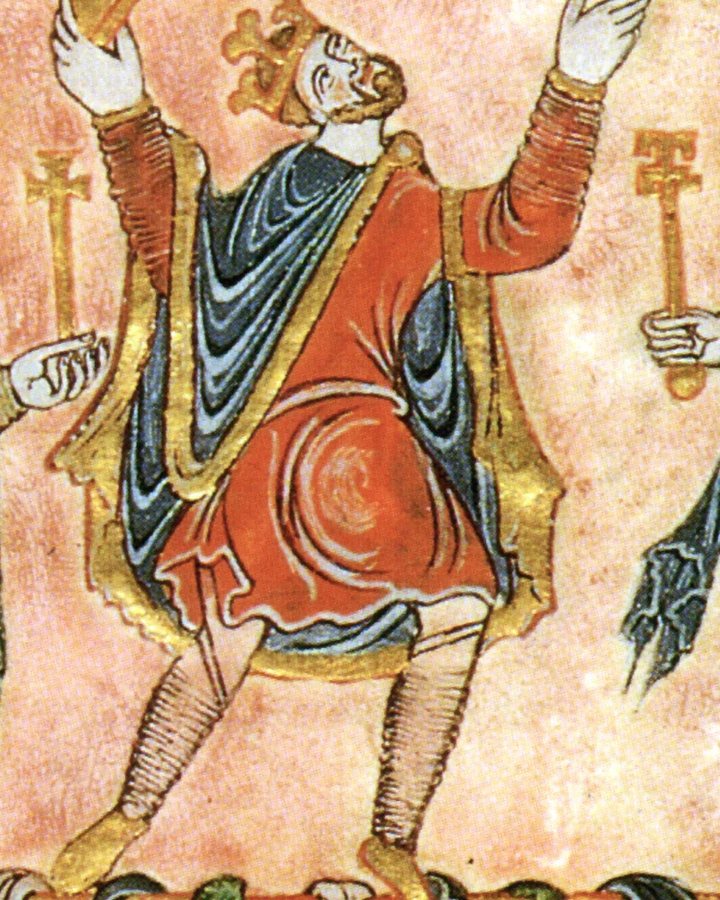 Edgar of EnglandSaint · 943–975Edgar of England, also known as Edgar the Peaceful, was the King of the English from 959 until 975. Born in the Kingdom of Wessex, he ascended to the throne following the death of his brother, Eadwig. His reign is often characterized by a period of relative stability and cultural prosperity, particularly regarding the Benedictine Reform. He was a significant supporter of monastic growth and administrative improvements, including the standardization of coinage. He died in Winchester and is remembered as a saint in several Christian traditions.
 Thomas CranmerSaint · 1489–1556Thomas Cranmer (1489–1556) was an influential English theologian and a central figure in the English Reformation. Serving as the Archbishop of Canterbury from 1533 to 1555, he played a vital role in the separation of the English Church from the Roman Catholic Church. He provided theological support for King Henry VIII's annulment from Catherine of Aragon and later established the liturgical foundations of the reformed Church of England. Recognized as a saint and martyr, his liturgical contributions shaped the religious identity of the Anglican tradition.
 Augustine of CanterburySaint · 550–605Augustine of Canterbury was a 6th-century Benedictine monk and missionary who served as the first Archbishop of Canterbury. Originally a prior in Rome, he was selected by Pope Gregory I in 595 to lead the Gregorian mission to Britain. His primary objective was to convert the Anglo-Saxon inhabitants, specifically King Æthelberht of Kent, to Christianity. Following his successful arrival and the subsequent conversion of the king, Augustine established a foundation for the church in England, laying the groundwork for the ecclesiastical structure of the region.
 AlcuinBlessed · 724–804Alcuin of York was an 8th-century Northumbrian scholar, poet, and theologian who became a central figure in the Carolingian Renaissance. Born in York, he studied under Archbishop Ecgbert before being invited to the court of Charlemagne. As a leading educator, he directed the Palace School in Aachen, where he taught the emperor and his children the liberal arts. He served as a deacon and an abbot, notably leading Marmoutier Abbey in Tours, where he influenced the development of the Carolingian minuscule script.
 Edward the MartyrPassion bearer · 962–978Edward the Martyr was an English monarch who reigned from 975 until his death in 978. As the firstborn son of King Edgar, his accession followed a period of political tension between competing noble factions regarding the succession. His brief rule ended abruptly when he was murdered in the Purbeck Hills, specifically at the Gap of Corfe. Although contemporary accounts leave the identity of his killer uncertain, historical narratives have frequently pointed toward his stepmother or the supporters of his half-brother, Æthelred.
 David I of ScotlandSaint · 1084–1153David I of Scotland was a 12th-century monarch who ruled Scotland from 1124 until his death in 1153. Born around 1084 to King Malcolm III and Queen Margaret, he spent much of his youth in England under the influence of Henry I. Before ascending the throne, he served as the Prince of the Cumbrians. His reign was characterized by significant structural changes to the Scottish state, including the introduction of feudalism and the establishment of various burghs and monasteries.
 William Wilberforce1759–1833William Wilberforce was a British politician and philanthropist who became a central figure in the movement to end the Atlantic slave trade. Born in 1759 in Hull, he served as an independent Member of Parliament for Yorkshire for many years. Following a religious conversion in 1785, he embraced evangelical Anglicanism, which redirected his political efforts toward moral reform. His lifelong commitment to abolitionism eventually contributed to the passage of legislation that ended slavery throughout much of the British Empire.
 John Wesley1703–1791John Wesley was an 18th-century English cleric, theologian, and evangelist who became a central figure in the Methodist revival within the Church of England. Born in Epworth in 1703, he was educated at Oxford, where he participated in the Holy Club to pursue a devout lifestyle. After an initial ministry in Georgia, he experienced a significant evangelical conversion in 1738. He spent much of his life traveling across Great Britain and Ireland, preaching outdoors and organizing small, disciplined Christian societies that eventually formed the foundation of Methodism.