Maximilian KolbeSaint · 1894–1941Maximilian Kolbe was a Polish Conventual Franciscan priest and missionary who lived from 1894 to 1941. He is widely recognized for his devotion to the Virgin Mary and his extensive work in religious publishing and radio. During World War II, he was imprisoned in the Auschwitz concentration camp, where he famously volunteered to die in place of a fellow prisoner. This act of self-sacrifice led to his martyrdom. He was later canonized by Pope John Paul II, who described him as a patron for the difficult twentieth century.
 Dietrich Bonhoeffer1906–1945Dietrich Bonhoeffer was a German Lutheran pastor and theologian who became a prominent figure of resistance against the Nazi regime. Born in 1906, he was a founding member of the Confessing Church, which opposed the Nazification of Protestantism. His theological work, including the classic *The Cost of Discipleship*, examined the relationship between faith and the secular world. After being arrested by the Gestapo for his involvement in efforts to save Jewish lives, he was eventually executed at the Flossenbürg concentration camp in 1945.
 Father PopieluszkoBlessed · 1947–1984Jerzy Popiełuszko (born Alfons Popiełuszko, 1947–1984) was a Polish Roman Catholic priest associated with the Solidarity trade union in communist Poland. He was known for sermons that combined spiritual messages with criticism of the government and support for the interned. In 1984 he was murdered by three Security Service agents, who were later tried and convicted. The Catholic Church recognized him as a martyr, and he was beatified in 2010.
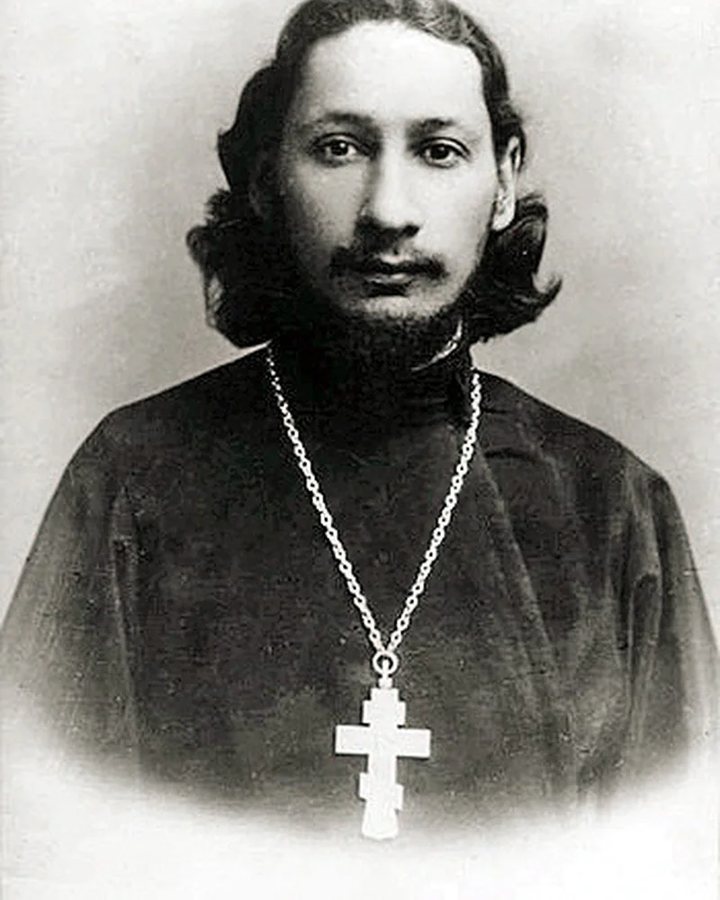 Pavel Florensky1882–1937Pavel Florensky was a versatile Russian polymath who lived from 1882 to 1937. A priest and theologian, he also made significant contributions to mathematics, physics, and electrical engineering. Born in Yevlakh, he sought to bridge the gap between scientific rationalism and spiritual faith through his diverse intellectual pursuits. His work spanned various disciplines, including art theory and electrodynamics, and he served as a professor and editor. During the early Soviet period, he contributed to the state electrification plan before his eventual arrest and death in the Leningrad Oblast.
 Sára SalkaháziServant of God · 1899–1944Sára Salkaházi was a Hungarian Catholic nun of the Sisters of Social Service who lived from 1899 to 1944. Originally a journalist and teacher, she joined her religious order in 1929 and dedicated much of her life to supporting working women through various associations and educational initiatives. During the Second World War, she used her positions to provide sanctuary to approximately one hundred Jewish refugees. For her courageous efforts to protect those persecuted by the Nazi-aligned Arrow Cross Party, she was eventually executed in Budapest.
 Yevgeny Rodionov1977–1996Yevgeny Rodionov was a Russian soldier who died in 1996 during the First Chechen War. Serving as an RPG operator in the border troops, he was captured by Chechen rebels alongside three fellow soldiers while guarding a road. He is remembered as a saint due to reports that he was executed in captivity because he refused to discard his Orthodox cross necklace or convert to Islam. Although he has not been formally canonized by the Russian Orthodox Church, he has gained widespread popular veneration for his perceived martyrdom.
 Titus BrandsmaBlessed · 1881–1942Titus Brandsma was a Dutch Carmelite friar, philosopher, and priest who lived from 1881 to 1942. A dedicated academic, he served as a professor and rector at the Catholic University of Nijmegen. He is primarily remembered for his courageous opposition to Nazi ideology, specifically his efforts to defend press freedom and resist antisemitism. After being arrested for delivering a letter from Dutch bishops to Catholic editors, he was sent to the Dachau concentration camp, where he died following a lethal injection. He was canonized as a saint by Pope Francis in 2022.
 Fritz Gerlich1883–1934Fritz Gerlich was a German historian and journalist who became a prominent opponent of Adolf Hitler and the Nazi Party. Born in Stettin in 1883, he initially worked as an archivist and editor before founding the weekly newspaper *Der Gerade Weg* (The Straight Path). After converting to Catholicism in 1931, his resistance against national socialism was deeply influenced by the social teachings of the Church. He was arrested by the Nazi regime in 1933 and was later executed at the Dachau concentration camp in 1934.
 Anna Demidova1878–1918Anna Demidova was a lady's maid who served Empress Alexandra of Russia during the final years of the Russian Empire. Born in Cherepovets to a merchant family, she was a graduate of the Yaroslavl Institute for Maids. She remained loyal to the Romanov family throughout their period of exile following the 1917 revolution. In July 1918, she was killed alongside the imperial family in Yekaterinburg. She is recognized for her steadfast devotion to her mistress during their captivity.
 Nikolaus GrossBlessed · 1898–1945Nikolaus Gross was a German Catholic layman, journalist, and trade unionist who lived from 1898 to 1945. Originally a coal miner, he transitioned into labor leadership and journalism, eventually serving as the general editor for a publication critical of the Nazi party. During the Third Reich, he actively resisted the regime through underground publishing and participation in the Cologne Circle. Following an arrest linked to an assassination attempt on Adolf Hitler, he was sentenced to death and executed at Plötzensee Prison in Berlin.
- PPetro OrosBlessed · 1917–1953Petro Oros was a Greek Catholic auxiliary bishop of the Mukachevo Eparchy who lived from 1917 to 1953. Born in Biri to a priest, he was ordained in 1942 and later consecrated as a bishop in 1944. During the Soviet occupation of Transcarpathia, he resisted government efforts to suppress the Greek Catholic Church and force its members into the Eastern Orthodox Church. He continued to perform his religious duties in secret until his death in 1953, when he was killed by a police officer.
 Zlata of MeglenGreat martyr · 1750–1795Zlata of Meglen was an 18th-century Eastern Orthodox saint born to a peasant family in the Meglen province. Born around 1750, she lived among Slavic speakers in what is now Greece. She is recognized as a great martyr for refusing to convert to Islam after being kidnapped by a local man. Despite intense physical suffering and pressure from both her captors and her own family, she remained steadfast in her faith until her death in October 1795.
 Jose Sanchez del RioBlessed · 1913–1928Jose Sanchez del Rio was a teenage Mexican Cristero who died in 1928 during the Cristero War. Born in Sahuayo, Michoacán, he joined the rebel forces as a young flagbearer after expressing a desire to die for his faith. During military conflicts, he provided his horse to a general before being captured by government troops. Despite facing severe torture and pressure to renounce his Catholic beliefs, he remained steadfast. He was executed by soldiers in Michoacán at the age of 14.
 Alicja KotowskaBlessed · 1899–1939Blessed, religious sister. Feast day: 11 November.
 Ahmed the CalligrapherSaint · †1682Ahmed the Calligrapher was a 17th-century Ottoman official in Constantinople who converted to Christianity. After observing the positive changes in the behavior of his Russian slaves following their church attendance, he sought permission to observe the Divine Liturgy. Moved by what he perceived as a miracle involving light during the service, he underwent baptism. His public expression of faith led to a confrontation with the Sultan and a judge, resulting in his execution for his conversion.
 Ignacio Ellacuría1930–1989Ignacio Ellacuría was a Spanish-born Jesuit priest, theologian, and philosopher who dedicated much of his life to service in El Salvador. Serving as the rector of the Universidad Centroamericana, he became a central figure in developing the institution's identity and training programs for clergy. His intellectual contributions were foundational to liberation philosophy and liberation theology, focusing on the necessity of transforming social realities to empower the oppressed. In 1989, during the Salvadoran Civil War, he was assassinated by soldiers alongside several colleagues at his university residence.
 Shtjefën KurtiVenerable monastic · 1898–1971Shtjefën Kurti was an Albanian Catholic priest who lived from 1898 to 1971. Born in Ferizaj, he received his theological training in several European cities, including Rome, before being ordained in 1924. Throughout his ministry, he served various parishes across Albania and Kosovo. He is primarily remembered for his steadfast adherence to his religious duties during a period of intense communist repression and state-enforced atheism in Albania, which eventually led to his arrest and execution.
 Saint Benjamin of PetrogradHieromartyr · 1873–1922Saint Benjamin of Petrograd was an Eastern Orthodox metropolitan who served the church in Saint Petersburg during the early Soviet era. Born Vasily Pavlovich Kazansky in 1873, he rose through the monastic ranks to become a prominent educator and eventually the Metropolitan of Petrograd and Gdov. He is remembered for his nonviolent resistance to state-led anti-religious campaigns and his commitment to maintaining an apolitical stance during the Russian Civil War. His leadership during a period of intense persecution led to his execution by a firing squad in 1922.
 Ioan SuciuBlessed · 1907–1953Ioan Suciu was a Romanian Greek Catholic bishop born in Blaj in 1907. After completing his theological studies in Rome, where he earned a doctorate, he was appointed as the auxiliary bishop of Oradea in 1940. His religious leadership was interrupted by the rise of the Communist regime, which prohibited his church. Following his arrest in 1948, he was moved between several locations before eventually dying from illness while held in the Sighet prison.
 Johannes PrassekBlessed · 1911–1943Johannes Prassek was a German Catholic priest born in Hamburg in 1911. After his ordination in Osnabrück in 1937, he served as a chaplain in Lübeck starting in 1939. During the Nazi era, he became an active member of the resistance by opposing National Socialist ideology through discussion groups and the distribution of anti-regime pamphlets. His efforts to support forced laborers, aided by his ability to speak Polish, eventually led to his arrest by the Gestapo in 1942.
- JJaime HilarioVenerable monastic · 1889–1937The Venerable. Feast day: 28 July.
 Zdenka Cecília SchelingováBlessed · 1916–1955Zdenka Cecília Schelingová was a Slovak Catholic nun and nurse born in 1916 who became a victim of communist persecution. A member of the Sisters of Mercy of the Holy Cross, she served in hospitals in Humenné and Bratislava. During the political upheaval following the 1948 coup, she risked her life to help priests escape imprisonment and state-mandated labor. Her efforts led to her arrest, subsequent torture in various prisons, and a terminal illness, eventually leading to her death in 1955.
 Peter of KrutitsyHieromartyr · 1862–1937Peter of Krutitsy was a prominent Russian Orthodox metropolitan who served as the patriarchal locum tenens during a period of intense Soviet persecution. Born Pyotr Fyodorovich Polyansky in 1862, he initially worked as a high-ranking lay official for the Holy Synod before answering a call from Patriarch Tikhon to enter the clergy. After his monastic tonsure and consecration as a bishop in 1920, he rose to lead the church administration. He remained the nominal head of the church despite years of imprisonment and exile, eventually facing execution in 1937.
 Kyranna of ThessalonikiSaint · 1731–1751Kyranna of Thessaloniki was an 18th-century Christian martyr born in Ossa, near Thessaloniki, within the Ottoman Empire. Living during a period of Ottoman rule, she is remembered for her refusal to abandon her faith. According to historical accounts, she faced execution after an Ottoman official attempted to force her into marriage and conversion to Islam. She died in 1751 at the age of twenty, and her life was later documented by Saint Nikodemos the Hagiorite in his writings on new martyrs.
 Josef Mayr-NusserBlessed · 1910–1945Josef Mayr-Nusser was a 20th-century Italian Catholic layman from Bolzano who is recognized for his conscientious objection to the Nazi regime. During World War II, while serving in the SS, he refused to swear an oath of allegiance to Adolf Hitler, citing his religious convictions. This act of resistance led to his imprisonment and subsequent death in 1945 while being transported to the Dachau concentration camp. He is remembered as a martyr for his refusal to violate his faith, specifically regarding the first commandment.
 Hermann LangeBlessed · 1912–1943Hermann Lange was a German Roman Catholic priest and theologian who lived from 1912 to 1943. Born in Leer, he became known for his resistance against the Nazi regime. Alongside several colleagues, including both Catholic priests and a Lutheran pastor, he distributed literature and delivered sermons that criticized the National Socialist government. His opposition eventually led to his arrest and execution by the Nazi authorities in a Hamburg prison.
 Michał KozalBlessed · 1893–1943Michał Kozal was a Polish Roman Catholic bishop who lived from 1893 to 1943. Born in Gmina Krotoszyn, he was a dedicated scholar and priest before being appointed as the Auxiliary Bishop of Włocławek in 1939. During the Second World War, he faced intense persecution from Nazi forces for his religious leadership and refusal to comply with Germanization efforts. He eventually died in the Dachau concentration camp after being murdered by a camp doctor, becoming a recognized martyr for his faith.
 Eduard MüllerBlessed · 1911–1943Blessed, Catholic priest. Feast day: 10 November.
 Joanikije Lipovac1890–1945Joanikije Lipovac was an Eastern Orthodox metropolitan who served the Diocese of Montenegro and the Littoral during the mid-20th century. Born in the Bay of Kotor in 1890, he studied theology in Zadar and philosophy in Belgrade before beginning his clerical career. He rose through the church hierarchy to become an auxiliary bishop in 1939 and eventually the metropolitan. His leadership during the Second World War and his subsequent execution by Yugoslav Partisans in 1945 led to his later recognition as a saint within the Serbian Orthodox Church.
 Józef StanekBlessed · 1916–1944Józef Stanek was a Polish Pallottine priest who served as a chaplain for the Home Army during World War II. Born in Łapsze Niżne in 1916, he joined the Pallottine order in 1935. Following his theological studies, he performed secret pastoral duties while also studying philosophy. He was killed in Warsaw in 1944 during the final stages of the Warsaw Uprising, after being captured and tortured by German forces.