John PaulSaint · 1920–2005Pope John Paul II (born Karol Józef Wojtyła; 1920–2005) was the head of the Catholic Church and sovereign of Vatican City from 1978 until his death in 2005. He was the first non-Italian pope since Adrian VI in the 16th century and the third longest-serving pope in history. He was also an important philosopher and theologian of the 20th century, known for his travels, his efforts to improve relations with other faiths, and his role in opposing communist rule in Poland and Europe.
 Saint PeterSaint · 1 BC–65Saint Peter was a first-century fisherman from Bethsaida who became one of the Twelve Apostles of Jesus. Also known as Simon or Cephas, he emerged as a central leader within the early Christian movement. According to various traditions, he served as the first bishop of Antioch and the first bishop of Rome, making him a foundational figure for several major Christian denominations. He is traditionally believed to have been martyred in Rome during the reign of Emperor Nero.
 JohnSaint · 1881–1963John XXIII, born Angelo Giuseppe Roncalli in 1881, was an Italian prelate who served as the head of the Catholic Church from 1958 until his death in 1963. After his ordination as a priest in 1904, he held several diplomatic roles, including serving as the Apostolic Nuncio to France and as a representative in Bulgaria, Turkey, and Greece. Following his appointment as a cardinal in 1953, he was elected pope, a position from which he initiated major institutional reforms.
 Mark the EvangelistSaint · 12–68Mark the Evangelist was a first-century Christian figure traditionally credited with writing the second Gospel. Often identified as John Mark, he is recognized in church tradition as the founder of the church in Alexandria, where he served as its first bishop. While modern scholars debate the specific identity of the Gospel's anonymous author, religious tradition holds that Mark recorded the teachings of the apostle Peter. He is celebrated as a foundational figure in early Christianity, particularly within the traditions of Africa and the Mediterranean.
 John ChrysostomHierarch · 349–407John Chrysostom was a prominent theologian, writer, and bishop who lived from approximately 347 to 407. Born in Antioch and raised by a devout mother, he studied rhetoric before practicing asceticism as a hermit. After being ordained a deacon in 381 and serving as a priest in Antioch, he was appointed Archbishop of Constantinople in 397. He is widely recognized as one of the four Great Greek Fathers and one of the Three Holy Hierarchs.
 George Berkeley1685–1753George Berkeley was an influential Anglo-Irish philosopher and Anglican clergyman who lived from 1685 to 1753. As a pioneer of the empiricism movement, he is best known for developing immaterialism, a form of subjective idealism which posits that material substances do not exist and that objects are merely collections of ideas perceived by the mind. Throughout his career, he served in several ecclesiastical roles, including Dean of Derry and Bishop of Cloyne, while his philosophical writings deeply impacted subsequent thinkers like David Hume and Immanuel Kant.
 Paul VIVenerable · 1897–1978Venerable, pope. Feast day: 26 September.
 John Paul IVenerable · 1912–1978John Paul I, born Albino Luciani, was an Italian prelate who served as pope for only thirty-three days in 1978. Born in Canale d'Agordo, he was ordained a priest in 1935 and later served as the Bishop of Vittorio Veneto. His ecclesiastical career included participation in the Second Vatican Council and a tenure as the Patriarch of Venice. He was the first pontiff to adopt a double name upon his election on August 26, 1978.
 Gregory ISaint · 540–604Gregory I, also known as Gregory the Great, was a 6th-century Roman pope and influential theologian. Born around 540 in Rome to a senator, he initially served as the city's prefect before retreating to a monastery established on his family's estate. Following his time as a monk, he became the 64th Bishop of Rome in 590. Throughout his papacy, which lasted until his death in 604, he exerted significant influence by sending missionaries to England and reasserting papal authority across parts of France and Spain.
 Basil of CaesareaHierarch · 329–379Basil of Caesarea was a 4th-century Christian bishop and influential theologian who served as the Bishop of Caesarea Mazaca in Cappadocia. Born around 330, he was part of the group of thinkers known as the Cappadocian Fathers. He was a staunch defender of the Nicene Creed, actively working to oppose heresies such as Arianism. Beyond his theological contributions, he established foundational principles for communal monasticism and created early forms of Christian hospitals to care for the poor.
 John Amos Comenius1592–1670John Amos Comenius (1592–1670) was a Moravian philosopher, theologian, and pedagogue who is widely recognized as the father of modern education. As the final bishop of the Unity of the Brethren, he spent much of his life as a religious refugee due to the Counter-Reformation. He traveled extensively across Europe, including Sweden, Poland, England, and the Netherlands, advising various governments on school reform. His influential work focused on pansophism and the concept of universal education, advocating for practical, lifelong learning and equal educational opportunities for all.
 Pius XIIVenerable · 1876–1958Venerable, pope. Feast day: 9 October.
 AmbroseSaint · 339–397Ambrose was a prominent fourth-century theologian, statesman, and Bishop of Milan. Born in Trier around 339, he initially served as a Roman governor of Aemilia-Liguria before his election to the episcopacy in 374. As a powerful religious leader, he defended orthodox Christian doctrine against Arianism and famously excommunicated Emperor Theodosius I. His intellectual and spiritual influence was profound, notably playing a key role in the conversion of Augustine. He is recognized as a Doctor of the Church and a major figure in the Latin tradition.
 Pius IXBlessed · 1792–1878Pius IX was the head of the Catholic Church from 1846 until his death in 1878, making his reign the longest verified papacy in history. Born Giovanni Maria Mastai-Ferretti in Senigallia, he initially gained a reputation as a liberal reformer. However, following the revolutions of 1848, his leadership became increasingly conservative. He is notably remembered for convening the First Vatican Council, which established the dogma of papal infallibility, and for his strong opposition to modernism and secularization during a period of significant political upheaval in Italy.
 Pius XBlessed · 1835–1914Pius X, born Giuseppe Melchiorre Sarto, was the head of the Catholic Church from 1903 until his death in 1914. Raised in a poor family in the Austrian Empire, he rose through the ecclesiastical ranks to become a priest, bishop, and eventually pope. His papacy was characterized by a firm opposition to modernism and a commitment to Thomist scholastic theology. He is remembered for promoting liturgical reforms, such as encouraging active participation by the faithful and lowering the age for receiving First Communion.
 Anselm of CanterburySaint · 1033–1109Anselm of Canterbury was an 11th-century Benedictine monk, theologian, and philosopher who served as the Archbishop of Canterbury from 1093 to 1109. Born in Aosta, he later became the abbot of Bec in Normandy, where he established the monastery as a major center of European learning. He is widely recognized as a pioneer of Scholasticism and is famous for developing the ontological argument for God's existence. Throughout his ecclesiastical career, he defended church interests against English monarchs, which led to multiple periods of exile.
 Gregory of NazianzusSaint · 329–389Gregory of Nazianzus was a prominent 4th-century theologian, orator, and prelate who served as the Archbishop of Constantinople. Born in Cappadocia, he received an extensive classical education in rhetoric and philosophy, which he later integrated into Christian doctrine. Known as one of the Cappadocian Fathers, he played a vital role in defining Trinitarian theology during a period of intense religious debate. His sophisticated literary style and deep philosophical insights established a lasting paradigm for Byzantine ecclesiastical thought and influenced centuries of Christian teaching.
 Saint NicholasWonderworker · 250–350Saint Nicholas of Myra was an early Christian bishop of Greek descent who served in the city of Myra in Anatolia during the Roman Empire. He is also known as Nicholas the Wonderworker because of the many miracles attributed to his intercession. Saint Nicholas is regarded as the patron saint of sailors, merchants, children, students and several other groups in various European cities and countries. His habit of secret gift-giving is one source of the folklore of Santa Claus.
 LinusSaint · 10–79Linus was a second-century Christian cleric who served as the second bishop of Rome. Born in Volterra, Tuscany, to Herculanus and Claudia, he became a companion to the apostles Peter and Paul. Following the leadership of his predecessors, he oversaw the early church in Rome from approximately 68 to 80. As a successor to Peter, he is recognized for establishing the roles of the first fifteen bishops and implementing specific liturgical practices within the growing community.
 Albertus MagnusSaint · 1193–1280Albertus Magnus was a 13th-century German Dominican friar, philosopher, and scientist. Born in Lauingen around 1193, he became a prominent scholar and served as the Bishop of Regensburg. He is celebrated for his vast intellectual contributions, having extensively commented on the works of Aristotle and integrated Aristotelian thought into medieval academic study. As a teacher, he famously instructed Thomas Aquinas, helping to shape the scholastic tradition. Recognized for his encyclopedic knowledge across many disciplines, he is honored as a saint and a Doctor of the Church.
 EleuterusSaint · †189Eleuterus was a Greek-born bishop of Rome who led the church from approximately 174 until his death in 189. Born in Nicopolis, he previously served as a deacon under Pope Anicetus and Pope Soter before ascending to the papacy. His leadership is associated with various historical traditions, including a legend involving a letter from a British king named Lucius requesting Christian conversion. He is recognized as a saint in the Catholic tradition.
 Celestine VSaint · 1215–1296Celestine V, born Pietro Angelerio, was an Italian Benedictine monk and hermit who served as pope for five months in 1294. After a two-year deadlock among cardinals, the ascetic known as Peter of Morrone was elected to lead the Catholic Church. Following his brief reign, he became the first pope to abdicate his office, seeking to return to his former life of solitude. His resignation established a precedent for the right of a pope to step down from the papacy.
 Urban IIBlessed · 1035–1099Urban II was a Benedictine monk who served as the head of the Catholic Church from 1088 until his death in 1099. Born Odo of Châtillon, he previously held positions as the prior of Cluny and the cardinal-bishop of Ostia. He is most famous for his speech at the Council of Clermont, which launched the First Crusade by calling for military expeditions to reclaim the Holy Land. During his papacy, he navigated intense political conflicts involving the Holy Roman Empire and worked to implement various Gregorian reforms within the church hierarchy.
 ClementSaint · †99Clement of Rome was a late first-century bishop of Rome, often identified as the fourth Pope. As one of the Apostolic Fathers, he was considered a contemporary and acquaintance of the Apostles, with some traditions suggesting he was personally ordained by Saint Peter. His leadership occurred during the formative years of the early Church in Ancient Rome. He is primarily remembered for his correspondence with the church in Corinth, which serves as an early foundational text regarding the authority of church leaders.
 Athanasius of AlexandriaHierarch · 296–373Athanasius of Alexandria was a prominent 4th-century theologian and the 20th Patriarch of Alexandria. Born around 296, he played a pivotal role in defending Nicene Christianity against Arianism, a movement that challenged the central doctrines of the faith. Serving as patriarch for forty-five years between 328 and 373, his career was marked by intense theological disputes and political struggles. Due to his opposition to Arian leaders and several Roman emperors, he endured five separate periods of exile. He remains a central figure in the history of the early Church and the development of Christian dogma.
 Sixtus IISaint · 215–258Sixtus II was a mid-third-century pope who led the Catholic Church from 257 until his death in 258. Born in Greece, he worked to mend fractured relationships between the Roman church and various Eastern and African communities. During the reign of Emperor Valerian, he became a target of intense religious persecution. He was ultimately executed in Rome by beheading, a death he shared with several of his deacons, including the well-known Lawrence of Rome.
 Damasus ISaint · 305–384Damasus I was the bishop of Rome from 366 until his death in 384. Born around 305, he likely hailed from Egitania or Rome and rose through the ecclesiastical ranks, serving as a deacon and priest before his election to the papacy. His leadership occurred during a transformative era when Christianity gained dominance throughout the Roman Empire. He is notably remembered for presiding over the Council of Rome in 382, which established the official canon of sacred scripture, and for supporting Jerome in the creation of the Vulgate Bible.
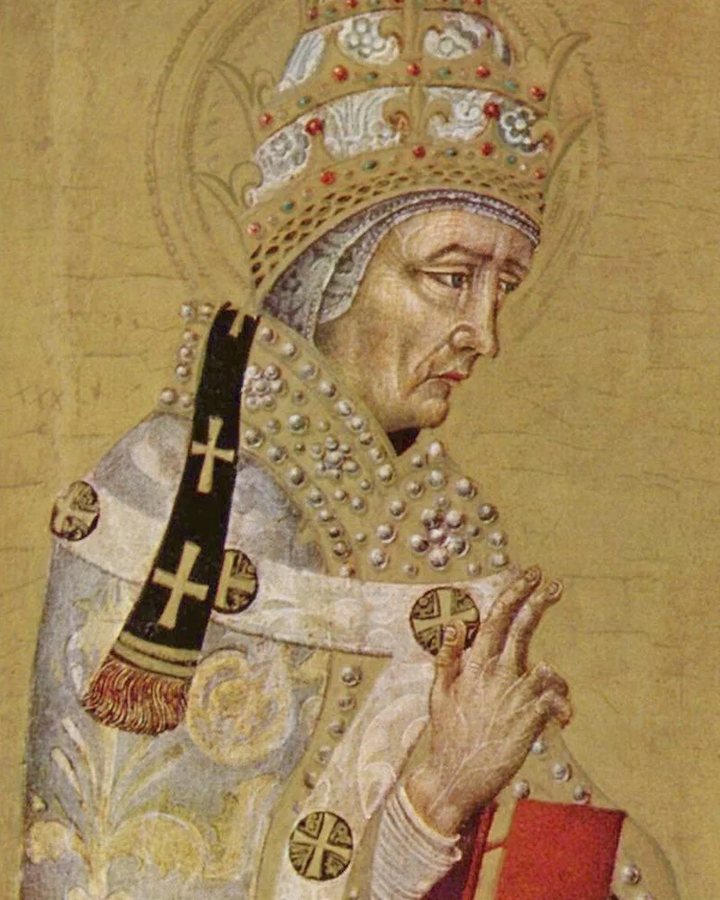 FabianHieromartyr · 200–250Fabian was a Roman bishop who served as the head of the Catholic Church from 236 until 250. According to historical accounts, his election was marked by a miraculous sign when a dove reportedly descended upon him during the selection process. During his fourteen-year papacy, he worked to resolve internal church schisms and organized the Christian community in Rome into distinct districts. He is remembered as a hieromartyr, having died during the persecutions initiated by Emperor Decius.
 DionysiusSaint · 200–268Dionysius was a 3rd-century bishop of Rome who served as pope from 259 until his death in 268. His leadership spanned a significant era of transition, moving from the intense persecutions under Emperor Valerian to a period of relative peace following the edict of toleration by Gallienus. During his tenure, he worked to reorganize the Roman church and address complex theological disputes regarding the nature of the Trinity, helping to stabilize the faith during a time of great instability.
 Lucius ISaint · 200–254Lucius I was a Roman bishop who served as pope from June 253 until his death in March 254. Born in Rome to Porphyrianus, he assumed leadership during a period of intense persecution. Shortly after his consecration, he faced banishment, though he eventually received permission to return to the city. He is recognized for his opposition to the Novationists, as he opposed their refusal to welcome Christians who had previously lapsed during times of persecution.