Nicholas II of RussiaSaint · 1868–1918Nicholas II was the last Emperor of Russia, reigning from 1894 until his abdication in 1917 during the Russian Revolution. A member of the Romanov dynasty, he presided over the Russian Empire's role in the Russo-Japanese War and the First World War. He and his family were killed by the Bolsheviks in 1918, during the Russian Civil War. His reign was marked by industrial growth and diplomatic activity, but also by unrest, military defeats and widespread criticism of his leadership.
 Leonhard Euler1707–1783Leonhard Euler (1707–1783) was a Swiss polymath who made fundamental contributions to mathematics, physics, astronomy, and music theory. Born in Basel, he spent much of his professional life working in Saint Petersburg and Berlin. He is credited with founding several mathematical disciplines, including graph theory and topology, and introduced much of the notation used in modern mathematics. His vast body of work spans diverse fields, ranging from fluid dynamics to the study of optics and mechanics.
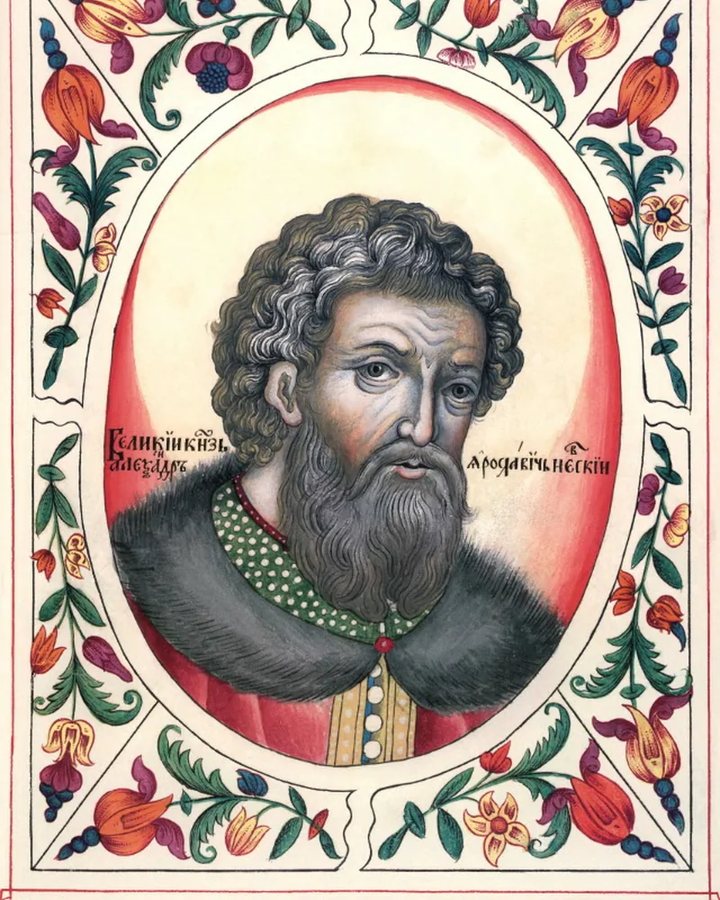 Alexander NevskyRight-believing · 1220–1263Alexander Nevsky was a 13th-century ruler of several Russian principalities, including Novgorod and Vladimir. Born in Pereslavl-Zalessky around 1221, he became a prominent military leader known for defending his territories against foreign incursions. He is most famous for his victories over Swedish forces at the Neva River and against German crusaders during the Battle on the Ice. By choosing to pay tribute to the Golden Horde, he sought to protect the Eastern Orthodox Church from Western influence. He died in Gorodets in 1263 and is venerated as a saint in both Catholic and Orthodox traditions.
 Dmitry DonskoySaint · 1350–1389Dmitry Donskoy was a 14th-century Grand Prince of Moscow and Vladimir who reigned from 1359 until his death in 1389. Born in Moscow, he ascended to power as a child following his father's death and was initially guided by Metropolitan Alexius. He is most famous for being the first Russian ruler to directly confront Mongol authority, achieving a significant military triumph against the forces of Mamai at the Battle of Kulikovo in 1380. This victory, which earned him his nickname, helped consolidate the prestige and authority of the Moscow principality.
 Olga of KievEqual-to-the-apostles · 890–969Olga of Kiev was a 10th-century regent of Kievan Rus' who governed on behalf of her son, Sviatoslav, from 945 to 957. Following the death of her husband, Prince Igor, she famously exacted violent retribution against the Drevlian tribe for his murder. As the first Rurikid ruler to be baptized, she paved the way for her grandson, Vladimir the Great, to establish Christianity as the state religion. She is honored in the Eastern Orthodox tradition as a saint with the title "Equal to the Apostles."
 Grand Duchess Anastasia Nikolaevna of RussiaPassion bearer · 1901–1918Grand Duchess Anastasia Nikolaevna of Russia (1901–1918) was the youngest daughter of the last Tsar, Nicholas II, and Tsarina Alexandra Feodorovna. Born in Peterhof, she was known for her vivacious, mischievous, and energetic personality. As part of the imperial family, she lived a relatively modest life despite her high rank. In July 1918, she was murdered alongside her parents and siblings by Bolshevik revolutionaries in Yekaterinburg. Following her death, she was recognized as a saint and passion bearer by the Russian Orthodox Church.
 Feodor I of Russia1557–1598Feodor I of Russia was the Tsar of all Russia from 1584 until 1598. As the son of Ivan the Terrible, his reign marked the final chapter of the Rurik dynasty. Often called the Blessed or the Bellringer, he was crowned at the Dormition Cathedral. During his time on the throne, Boris Godunov served as the administrator of the state. Because he died without any surviving children, his passing signaled the end of his family's long rule over the country.
 Grand Duchess Olga Nikolaevna of RussiaPassion bearer · 1895–1918Grand Duchess Olga Nikolaevna of Russia was the eldest daughter of Emperor Nicholas II and Empress Alexandra Feodorovna. Born in 1895 in Pushkin, she lived as a member of the imperial family during the final years of the Russian Empire. During the First World War, she served as a nurse in a military hospital, tending to wounded soldiers. Her life ended in July 1918 at the Ipatiev House, where she was killed alongside her family following the Russian Revolution.
 Alexandra Feodorovna (Alix of Hesse)Passion bearer · 1872–1918Alexandra Feodorovna was the final empress consort of Russia, married to Nicholas II from 1894 until his abdication in 1917. Born Princess Alix of Hesse, she was a member of the German imperial family and a granddaughter of Queen Victoria. After converting from Lutheranism to Russian Orthodoxy to marry the future Tsar, she lived in the Russian Empire, where she served as a nurse and supported the autocracy. Her life ended in 1918 when she and her five children were executed by Bolshevik forces in Yekaterinburg.
 Alexei Nikolaevich, Tsarevich of RussiaPassion bearer · 1904–1918Alexei Nikolaevich (1904–1918) was the final tsarevich and heir apparent to the Russian throne. As the only son of Tsar Nicholas II and Empress Alexandra Feodorovna, his birth was a moment of great joy for the imperial family. Throughout his childhood, he struggled with severe hemophilia, a condition inherited from his mother's lineage that made minor injuries life-threatening. Following the Russian Revolution, the imperial family was held in exile before being executed by the Ural Regional Soviet in July 1918.
 Grand Duchess Maria Nikolaevna of RussiaPassion bearer · 1899–1918Grand Duchess Maria Nikolaevna of Russia was the third daughter of Tsar Nicholas II and Empress Alexandra Feodorovna. Born in Peterhof in 1899, she was the middle child among four sisters in the imperial family. During her life in the Russian Empire, she served as a patroness for a hospital and frequently visited wounded soldiers. Her life ended in July 1918 at the Ipatiev House, where she was murdered alongside her family members.
 Ivan I of MoscowRight-believing · 1288–1340Ivan I of Moscow was a 14th-century Russian ruler who served as the Prince of Moscow from 1325 and the Grand Prince of Vladimir starting in 1331. Known as Kalita, he navigated complex relations with the Golden Horde to secure political dominance for his dynasty. By maintaining loyalty to the Mongol khans and collecting tribute from neighboring territories, he significantly increased the wealth and influence of Moscow. His strategic alliance with the Orthodox Church helped establish his capital as a primary spiritual center for the region.
 Grand Duchess Tatiana Nikolaevna of RussiaPassion bearer · 1897–1918Grand Duchess Tatiana Nikolaevna of Russia was the second daughter of Tsar Nicholas II and Tsarina Alexandra Feodorovna. Born in 1897 at Peterhof Palace, she was known for her elegant appearance and practical, nurturing personality. During the First World War, she served as a nurse and led various charitable committees. Following the Russian Revolution, she and her family were arrested and subsequently murdered by Bolshevik revolutionaries in July 1918 at the Ipatiev House. She is recognized by the Russian Orthodox Church as a passion bearer.
 Daniel of MoscowWonderworker · 1261–1303Daniel of Moscow was a 13th-century Russian prince and the youngest son of Alexander Nevsky. As the ruler of Moscow, he established the foundation for the city's future prominence and became the ancestor of the Muscovite line of the Rurik dynasty. He was a significant political figure who navigated complex conflicts between various Rus' princes and the Golden Horde. Recognized as a wonderworker, he is venerated in the Eastern Orthodox tradition.
 Fyodor UshakovSaint · 1745–1817Fyodor Ushakov was an 18th-century naval commander and saint who served the Russian Empire. Born in Burnakovo in 1745, he entered the Imperial Russian Navy in 1761. He is widely recognized for his exceptional military leadership, having won 43 consecutive naval engagements. During his career, he supervised the construction of the Sevastopol naval base and commanded fleets in the Mediterranean, where he successfully captured Naples and Rome. He resigned his command in 1807 and passed away in Alekseevka in 1817.
 AvvakumSaint · 1620–1682Avvakum was a 17th-century Russian priest and a prominent leader of the Old Believers. Born in Grigorovo, he became a central figure in the opposition against the liturgical reforms introduced by Patriarch Nikon. His refusal to accept these changes, which aimed to align Russian practices with Greek traditions, led to repeated imprisonments and eventual exile. He is widely celebrated as a significant literary figure due to his autobiography, which is regarded as a masterpiece of Russian literature for its unique blend of sacred and vernacular language.
 Andrey BogolyubskySaint · 1111–1174Andrey Bogolyubsky (died 28 June 1174) was Prince of Vladimir-Suzdal from 1157 until his death. He moved his power base to the town of Vladimir, consolidated his father's lands under his sole rule and sought to dominate Kievan Rus'. His troops sacked Kiev in 1169, after which he claimed the title of Grand Prince while keeping his residence at Vladimir. He was later canonized as a saint in the Russian Orthodox Church in 1702.
 Princess Elisabeth of Hesse and by RhineVenerable martyr · 1864–1918Princess Elisabeth of Hesse and by Rhine was a German princess who later became a Grand Duchess of Russia and an Orthodox nun. Born in Darmstadt in 1864, she was the daughter of Grand Duke Ludwig IV and Princess Alice, a daughter of Queen Victoria. After marrying Grand Duke Sergei Alexandrovich, she became known for her charitable work and her dignified presence in Russian society. Following the assassination of her husband, she transitioned from royal life to religious devotion, establishing a convent to serve the poor before her death in 1918.
 Sergius of RadonezhWonderworker · 1314–1392Sergius of Radonezh was a 14th-century Russian Orthodox monk, priest, and abbot who became a central figure in the spiritual revival of his era. Born Bartholomew to a boyar family, he eventually settled in the forest near Moscow to live an ascetic life. He founded the Trinity Lavra of St. Sergius, which grew into a major monastic center. Recognized as a wonderworker, he exerted immense influence over the Russian Church and is remembered for his commitment to manual labor and his role in establishing numerous monasteries across the region.
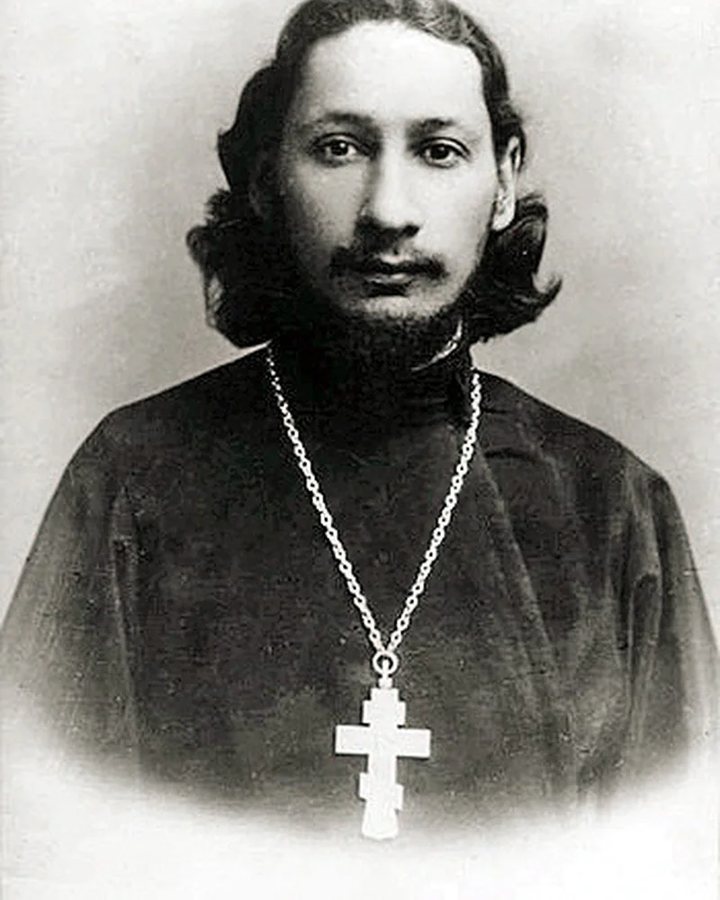 Pavel Florensky1882–1937Pavel Florensky was a versatile Russian polymath who lived from 1882 to 1937. A priest and theologian, he also made significant contributions to mathematics, physics, and electrical engineering. Born in Yevlakh, he sought to bridge the gap between scientific rationalism and spiritual faith through his diverse intellectual pursuits. His work spanned various disciplines, including art theory and electrodynamics, and he served as a professor and editor. During the early Soviet period, he contributed to the state electrification plan before his eventual arrest and death in the Leningrad Oblast.
 Seraphim of SarovVenerable monastic · 1754–1833Seraphim of Sarov was an 18th-century Russian monk and priest who became one of the most famous spiritual elders in the Orthodox tradition. Born Prokhor Moshnin in Kursk, he entered the Sarov monastery in 1777 and later served as a spiritual leader at the Diveyevo Convent. He is widely recognized for his intense asceticism, including a period of solitary life in the woods and a ritual of continuous prayer performed on a rock. His teachings focused on the acquisition of the Holy Spirit and the pursuit of inner peace.
 Yuri II of VladimirSaint · 1188–1238Yuri II of Vladimir was a 13th-century Grand Prince who ruled the Principality of Vladimir-Suzdal during the Mongol invasion. Born in Suzdal in 1188, he was the son of Vsevolod III and eventually succeeded his brother, Konstantin, to the throne. He is recognized for establishing the fortress of Nizhny Novgorod in 1221 to secure strategic trade routes. His reign concluded during the devastating Mongol conquest, as he was killed during the Battle of the Sit River in 1238.
 Mikhail of TverSaint · 1271–1318Mikhail of Tver was a 13th-century ruler who served as the Prince of Tver and held the title of Grand Prince of Vladimir during two separate periods. Born in 1271, he was the son of Yaroslav III and the brother of Aleksandr Nevsky. His political career was marked by intense competition with the princes of Moscow for regional dominance and complex relations with the Golden Horde. After being summoned to Sarai, he was executed in 1318, an event that eventually led to his recognition as a saint.
 Tikhon of MoscowHierarch · 1865–1925Tikhon of Moscow (1865–1925) was a prominent Russian Orthodox prelate who served as the eleventh Patriarch of Moscow and All Russia. Following a two-century period of Synodal administration, he was elected to restore the patriarchate in 1917. Before his leadership in Russia, he served as a bishop in North America, where he oversaw growing immigrant communities and established several churches. His tenure as patriarch was marked by significant challenges, including the political upheavals of the Russian Revolution and the subsequent pressures exerted by the Soviet government.
 Maximus the GreekVenerable monastic · 1475–1556Maximus the Greek was a 16th-century Greek monk, theologian, and scholar who lived and worked in Russia. Born Michael Trivolis around 1475 in Arta, he was educated in Italy and later took monastic vows on Mount Athos. He traveled to Moscow in 1518 to assist with the translation of religious texts, eventually becoming a prominent figure in religious reform. His critical views regarding monastic property and social injustices led to his imprisonment and long exile, where he remained until his death in 1556.
 Basil Fool for ChristWonderworker · 1468–1552Basil Fool for Christ was a 16th-century Russian holy man, known for his lifestyle of extreme poverty and intentional foolishness. Born in Moscow to a family of serfs, he lived as a *yurodivy*, often appearing naked or wearing heavy chains. He dedicated his life to supporting the impoverished, specifically assisting those too proud to beg for themselves. Recognized for his prophetic abilities, he famously criticized Tsar Ivan the Terrible for his conduct during religious services.
 Prince John Constantinovich of Russia1886–1918Prince John Constantinovich of Russia was a member of the imperial family and a decorated military officer. Born in Pavlovsk in 1886, he held the title of Prince of the Imperial Blood after a change in house laws reduced his status from Grand Duke. Known for his deep religious devotion, he served as a subdeacon and a choir director. Following the Russian Revolution, he was exiled to the Urals, where he was killed by Bolshevik authorities in July 1918 near Alapayevsk.
 Duchess Alexandra of Oldenburg1838–1900Duchess Alexandra of Oldenburg was a 19th-century Grand Duchess of Russia and a nun who dedicated her life to medical charity. Born in Saint Petersburg to Duke Peter of Oldenburg and Princess Therese of Nassau-Weilburg, she was the great-granddaughter of Emperor Paul I. Although raised in the Lutheran faith, she converted to Eastern Orthodoxy following her marriage to Grand Duke Nicholas Nikolaevich. Following a difficult marriage and a paralyzing accident, she eventually settled in Kyiv, where she founded a convent and hospital to serve the impoverished.
 Dmitry of UglichPassion bearer · 1582–1591Dmitry of Uglich was the youngest son of the Russian tsar Ivan the Terrible. Born in Moscow in 1582, he lived as a tsarevich during the reign of Feodor I before being sent to Uglich in 1584. His life ended prematurely in 1591 under mysterious circumstances, with theories suggesting either an accidental self-inflicted injury or a murder orchestrated by Boris Godunov. He is recognized as a saint within the Orthodox and Catholic traditions, specifically honored as a passion bearer.
 Nicholas of JapanEqual-to-the-apostles · 1836–1912Nicholas of Japan was a nineteenth-century Russian Orthodox missionary, theologian, and bishop who played a central role in introducing Eastern Orthodoxy to the Japanese people. Born Ivan Kasatkin in the Smolensk region, he traveled to Japan in 1861 to serve at a consulate chapel. Through his deep study of the Japanese language, culture, and Buddhism, he successfully built a large religious community. He eventually served as the Archbishop of All Japan, leaving a lasting spiritual and linguistic legacy through his extensive translations of sacred texts.