Michelangelo1475–1564Michelangelo di Lodovico Buonarroti Simoni (1475–1564) was an Italian sculptor, painter, architect and poet of the High Renaissance. Born in the Republic of Florence, he was mostly active in Rome from his thirties onwards. His work drew on classical antiquity and had a lasting influence on Western art. Alongside his elder contemporary Leonardo da Vinci, he is regarded as an archetypal Renaissance man, and he is one of the best-documented artists of the 16th century.
 CharlemagneBlessed · 748–814Charlemagne was King of the Franks from 768, King of the Lombards from 774, and Emperor of the Carolingian Empire from 800. He united most of Western and Central Europe and was the first recognised emperor to rule from the west after the fall of the Western Roman Empire about three centuries earlier. His reign brought political, social and cultural changes that shaped Europe throughout the Middle Ages, and many historians call him the Father of Europe.
 Saint PeterSaint · 1 BC–65Saint Peter was a first-century fisherman from Bethsaida who became one of the Twelve Apostles of Jesus. Also known as Simon or Cephas, he emerged as a central leader within the early Christian movement. According to various traditions, he served as the first bishop of Antioch and the first bishop of Rome, making him a foundational figure for several major Christian denominations. He is traditionally believed to have been martyred in Rome during the reign of Emperor Nero.
 Constantine the GreatSaint · 272–337Constantine the Great was a Roman emperor who ruled from 306 to 337. Born in Naissus, he rose to power through military service and civil wars, eventually becoming the sole ruler of the empire. He is most famous for being the first emperor to convert to Christianity, a transition marked by the Edict of Milan which ended the persecution of Christians. By establishing Constantinople as the new imperial capital, he fundamentally altered the political and religious landscape of the Mediterranean world.
 Paul the ApostleSaint · 5–66Paul the Apostle, born Saul of Tarsus, was a Christian apostle who spread the teachings of Jesus in the first century AD. Although he was not one of the Twelve Apostles and did not know Jesus during his lifetime, he is regarded as one of the most important figures of the Apostolic Age. He founded several Christian communities in Asia Minor and Europe between the mid-40s and mid-50s AD, and fourteen of the 27 books of the New Testament have traditionally been attributed to him.
 Thomas AquinasSaint · 1225–1274Thomas Aquinas was an influential Italian Dominican friar, priest, and philosopher who lived from approximately 1225 to 1274. A central figure in medieval scholasticism, he developed a philosophical system known as Thomism by synthesizing Aristotelian thought with Christian doctrine. His extensive writings, including the unfinished Summa Theologica, addressed complex questions of theology, ethics, and natural reason. Recognized as one of the most significant thinkers in Western history, he is honored as a saint and a Doctor of the Church, holding titles such as the Angelic Doctor.
 JohnSaint · 1881–1963John XXIII, born Angelo Giuseppe Roncalli in 1881, was an Italian prelate who served as the head of the Catholic Church from 1958 until his death in 1963. After his ordination as a priest in 1904, he held several diplomatic roles, including serving as the Apostolic Nuncio to France and as a representative in Bulgaria, Turkey, and Greece. Following his appointment as a cardinal in 1953, he was elected pope, a position from which he initiated major institutional reforms.
 Francis of AssisiSaint · 1182–1226Francis of Assisi (born Giovanni di Pietro di Bernardone, c. 1181 – 1226) was an Italian mystic, poet and Catholic friar who founded the religious order of the Franciscans. Born into a wealthy merchant family in Assisi, he turned toward a life of poverty and devotion as a young man, repairing chapels and caring for the sick. He later gathered followers, and after receiving papal approval the Order of Friars Minor grew rapidly under his leadership. He was canonized in 1228 and is one of the most venerated figures in Christianity.
 Paul VIVenerable · 1897–1978Venerable, pope. Feast day: 26 September.
 Pontius PilatusPontius Pilate was the fifth Roman prefect of Judaea, serving from approximately 26 to 36 AD under Emperor Tiberius. He is primarily recognized for presiding over the trial of Jesus and authorizing his crucifixion. While historical records regarding his early life are scarce, he remains one of the most well-documented governors of the province. His role in the biblical narrative ensures his enduring presence in Christian theology, as his name is included in both the Apostles' and Nicene Creeds.
 John Paul IVenerable · 1912–1978John Paul I, born Albino Luciani, was an Italian prelate who served as pope for only thirty-three days in 1978. Born in Canale d'Agordo, he was ordained a priest in 1935 and later served as the Bishop of Vittorio Veneto. His ecclesiastical career included participation in the Second Vatican Council and a tenure as the Patriarch of Venice. He was the first pontiff to adopt a double name upon his election on August 26, 1978.
 Gregory ISaint · 540–604Gregory I, also known as Gregory the Great, was a 6th-century Roman pope and influential theologian. Born around 540 in Rome to a senator, he initially served as the city's prefect before retreating to a monastery established on his family's estate. Following his time as a monk, he became the 64th Bishop of Rome in 590. Throughout his papacy, which lasted until his death in 604, he exerted significant influence by sending missionaries to England and reasserting papal authority across parts of France and Spain.
 BoethiusBlessed · 480–525Boethius was a prominent Roman senator, consul, and polymath who lived during the early 6th century in the Ostrogothic Kingdom. Born in Rome to the influential Anicii family, he rose to high political office under the rule of Theodoric the Great. He is widely recognized for his extensive efforts to translate Greek classical works into Latin, which helped preserve ancient knowledge for the Middle Ages. Despite his political success, his opposition to corruption at court led to his imprisonment and eventual execution in Pavia.
 Pius XIIVenerable · 1876–1958Venerable, pope. Feast day: 9 October.
 AmbroseSaint · 339–397Ambrose was a prominent fourth-century theologian, statesman, and Bishop of Milan. Born in Trier around 339, he initially served as a Roman governor of Aemilia-Liguria before his election to the episcopacy in 374. As a powerful religious leader, he defended orthodox Christian doctrine against Arianism and famously excommunicated Emperor Theodosius I. His intellectual and spiritual influence was profound, notably playing a key role in the conversion of Augustine. He is recognized as a Doctor of the Church and a major figure in the Latin tradition.
 Pius IXBlessed · 1792–1878Pius IX was the head of the Catholic Church from 1846 until his death in 1878, making his reign the longest verified papacy in history. Born Giovanni Maria Mastai-Ferretti in Senigallia, he initially gained a reputation as a liberal reformer. However, following the revolutions of 1848, his leadership became increasingly conservative. He is notably remembered for convening the First Vatican Council, which established the dogma of papal infallibility, and for his strong opposition to modernism and secularization during a period of significant political upheaval in Italy.
 Pius XBlessed · 1835–1914Pius X, born Giuseppe Melchiorre Sarto, was the head of the Catholic Church from 1903 until his death in 1914. Raised in a poor family in the Austrian Empire, he rose through the ecclesiastical ranks to become a priest, bishop, and eventually pope. His papacy was characterized by a firm opposition to modernism and a commitment to Thomist scholastic theology. He is remembered for promoting liturgical reforms, such as encouraging active participation by the faithful and lowering the age for receiving First Communion.
 Anselm of CanterburySaint · 1033–1109Anselm of Canterbury was an 11th-century Benedictine monk, theologian, and philosopher who served as the Archbishop of Canterbury from 1093 to 1109. Born in Aosta, he later became the abbot of Bec in Normandy, where he established the monastery as a major center of European learning. He is widely recognized as a pioneer of Scholasticism and is famous for developing the ontological argument for God's existence. Throughout his ecclesiastical career, he defended church interests against English monarchs, which led to multiple periods of exile.
 Theodosius ISaint · 347–395Theodosius I was a Roman emperor who ruled from 379 until his death in 395. Born in Hispania, he rose through the military ranks under his father's guidance before being appointed to lead the empire following the death of Valens. He is notably the final ruler to govern the entire Roman Empire before it was divided between his two sons, Arcadius and Honorius. As a devout Christian, he played a pivotal role in shaping religious policy by establishing the Nicene Creed as the official orthodox doctrine.
 LinusSaint · 10–79Linus was a second-century Christian cleric who served as the second bishop of Rome. Born in Volterra, Tuscany, to Herculanus and Claudia, he became a companion to the apostles Peter and Paul. Following the leadership of his predecessors, he oversaw the early church in Rome from approximately 68 to 80. As a successor to Peter, he is recognized for establishing the roles of the first fifteen bishops and implementing specific liturgical practices within the growing community.
 Celestine VSaint · 1215–1296Celestine V, born Pietro Angelerio, was an Italian Benedictine monk and hermit who served as pope for five months in 1294. After a two-year deadlock among cardinals, the ascetic known as Peter of Morrone was elected to lead the Catholic Church. Following his brief reign, he became the first pope to abdicate his office, seeking to return to his former life of solitude. His resignation established a precedent for the right of a pope to step down from the papacy.
 Urban IIBlessed · 1035–1099Urban II was a Benedictine monk who served as the head of the Catholic Church from 1088 until his death in 1099. Born Odo of Châtillon, he previously held positions as the prior of Cluny and the cardinal-bishop of Ostia. He is most famous for his speech at the Council of Clermont, which launched the First Crusade by calling for military expeditions to reclaim the Holy Land. During his papacy, he navigated intense political conflicts involving the Holy Roman Empire and worked to implement various Gregorian reforms within the church hierarchy.
 ClementSaint · †99Clement of Rome was a late first-century bishop of Rome, often identified as the fourth Pope. As one of the Apostolic Fathers, he was considered a contemporary and acquaintance of the Apostles, with some traditions suggesting he was personally ordained by Saint Peter. His leadership occurred during the formative years of the early Church in Ancient Rome. He is primarily remembered for his correspondence with the church in Corinth, which serves as an early foundational text regarding the authority of church leaders.
 Benedict of NursiaSaint · 480–547Benedict of Nursia (c. 480 – 547), often known as Saint Benedict, was an Italian monk who founded the Order of Saint Benedict. He is honoured by the Catholic, Eastern Orthodox, Lutheran, Anglican and Old Catholic churches, and in 1964 Pope Paul VI named him a patron saint of Europe. His main achievement was the Rule of Saint Benedict, a set of guidelines for monastic life that stressed balance, moderation and reasonableness. The rule was adopted by many religious communities across the Middle Ages and became one of the most influential in Western Christianity.
 Ignatius of LoyolaBlessed · 1491–1556Ignatius of Loyola was a 16th-century Spanish priest, theologian, and soldier who established the Society of Jesus, commonly known as the Jesuits. Born in the Basque region around 1491, he transitioned from a military life to a religious one following a severe leg injury sustained during the Battle of Pamplona. After a period of spiritual reflection, he founded the religious order in Paris in 1541, serving as its first Superior General. His spiritual teachings and emphasis on missionary work and education played a significant role in the Counter-Reformation.
 Sixtus IISaint · 215–258Sixtus II was a mid-third-century pope who led the Catholic Church from 257 until his death in 258. Born in Greece, he worked to mend fractured relationships between the Roman church and various Eastern and African communities. During the reign of Emperor Valerian, he became a target of intense religious persecution. He was ultimately executed in Rome by beheading, a death he shared with several of his deacons, including the well-known Lawrence of Rome.
 Damasus ISaint · 305–384Damasus I was the bishop of Rome from 366 until his death in 384. Born around 305, he likely hailed from Egitania or Rome and rose through the ecclesiastical ranks, serving as a deacon and priest before his election to the papacy. His leadership occurred during a transformative era when Christianity gained dominance throughout the Roman Empire. He is notably remembered for presiding over the Council of Rome in 382, which established the official canon of sacred scripture, and for supporting Jerome in the creation of the Vulgate Bible.
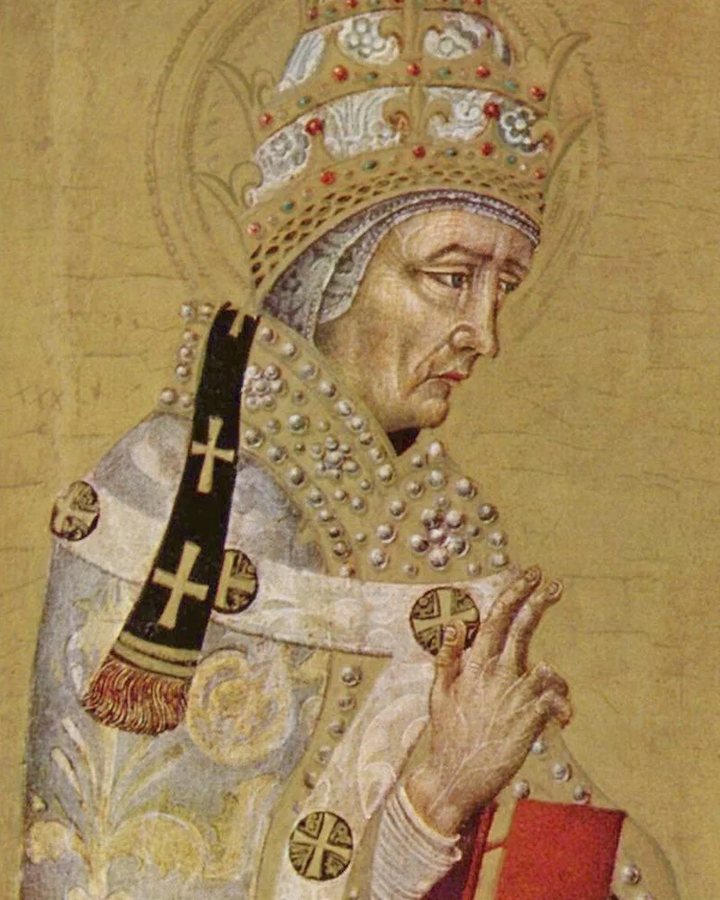 FabianHieromartyr · 200–250Fabian was a Roman bishop who served as the head of the Catholic Church from 236 until 250. According to historical accounts, his election was marked by a miraculous sign when a dove reportedly descended upon him during the selection process. During his fourteen-year papacy, he worked to resolve internal church schisms and organized the Christian community in Rome into distinct districts. He is remembered as a hieromartyr, having died during the persecutions initiated by Emperor Decius.
 DionysiusSaint · 200–268Dionysius was a 3rd-century bishop of Rome who served as pope from 259 until his death in 268. His leadership spanned a significant era of transition, moving from the intense persecutions under Emperor Valerian to a period of relative peace following the edict of toleration by Gallienus. During his tenure, he worked to reorganize the Roman church and address complex theological disputes regarding the nature of the Trinity, helping to stabilize the faith during a time of great instability.
 Lucius ISaint · 200–254Lucius I was a Roman bishop who served as pope from June 253 until his death in March 254. Born in Rome to Porphyrianus, he assumed leadership during a period of intense persecution. Shortly after his consecration, he faced banishment, though he eventually received permission to return to the city. He is recognized for his opposition to the Novationists, as he opposed their refusal to welcome Christians who had previously lapsed during times of persecution.