Martin Luther1483–1546Martin Luther was a German priest, theologian, author, hymnwriter, professor and former Augustinian friar who became the central figure of the Protestant Reformation. His theological beliefs form the basis of Lutheranism, and he is regarded as one of the most influential figures in Western and Christian history. Born in Eisleben in 1483, he was ordained a priest in 1507 and later rejected several teachings of the Roman Catholic Church, especially those concerning indulgences and papal authority.
 Johann Sebastian Bach1685–1750Johann Sebastian Bach (1685–1750) was a German composer and musician of the late Baroque period. He wrote prolifically for many instruments and forms, including orchestral, solo, keyboard, organ, and choral works. He is noted for his mastery of counterpoint, and he is widely regarded as one of the greatest composers in the history of Western music.
 Albrecht Dürer1471–1528Albrecht Dürer was a prominent German painter, printmaker, and theorist who lived from 1471 to 1528. Born in Nuremberg, he became a central figure of the Northern Renaissance, gaining international fame during his twenties through his exceptional woodcut prints. His artistic style integrated classical motifs and humanistic ideals, influenced by his travels to Italy and interactions with masters like Leonardo da Vinci and Raphael. Beyond his visual works, he contributed significantly to art theory through treatises on mathematics, linear perspective, and human proportions.
 CharlemagneBlessed · 748–814Charlemagne was King of the Franks from 768, King of the Lombards from 774, and Emperor of the Carolingian Empire from 800. He united most of Western and Central Europe and was the first recognised emperor to rule from the west after the fall of the Western Roman Empire about three centuries earlier. His reign brought political, social and cultural changes that shaped Europe throughout the Middle Ages, and many historians call him the Father of Europe.
 Johannes Kepler1571–1630Johannes Kepler was a German mathematician, astronomer, and polymath who lived from 1571 to 1630. A central figure in the Scientific Revolution, he is most famous for discovering the three laws of planetary motion. His work helped transition astronomy into a branch of mathematical physics, bridging the gap between ancient cosmology and modern science. Beyond his celestial studies, he made significant contributions to optics, music theory, and mathematics, while also serving as an imperial mathematician and an assistant to Tycho Brahe.
 George Frideric Handel1685–1759George Frideric Handel was a prominent German-British composer of the Baroque era, celebrated for his contributions to opera, oratorio, and concerto. Born in Halle in 1685, he traveled through Hamburg and Italy before establishing himself in London in 1712. Throughout his prolific career, he became a naturalized British subject and achieved immense success, transitioning from Italian opera to English choral works following a physical breakdown in 1737. His compositions, including the famous *Messiah*, remain cornerstones of the classical repertoire.
 AmbroseSaint · 339–397Ambrose was a prominent fourth-century theologian, statesman, and Bishop of Milan. Born in Trier around 339, he initially served as a Roman governor of Aemilia-Liguria before his election to the episcopacy in 374. As a powerful religious leader, he defended orthodox Christian doctrine against Arianism and famously excommunicated Emperor Theodosius I. His intellectual and spiritual influence was profound, notably playing a key role in the conversion of Augustine. He is recognized as a Doctor of the Church and a major figure in the Latin tradition.
 William of Ockham1287–1349William of Ockham was a prominent 14th-century English Franciscan friar, philosopher, and theologian. Born around 1287, he studied at the University of Oxford before becoming embroiled in intense intellectual and political conflicts. He is famously associated with the principle of parsimony, known as Ockham's razor, which suggests that simpler explanations are preferable. His work significantly influenced medieval thought, particularly through his development of nominalism, a philosophical position regarding universals. After fleeing the papal court in Avignon due to disputes over apostolic poverty, he spent his final years in Munich under imperial protection.
 Albertus MagnusSaint · 1193–1280Albertus Magnus was a 13th-century German Dominican friar, philosopher, and scientist. Born in Lauingen around 1193, he became a prominent scholar and served as the Bishop of Regensburg. He is celebrated for his vast intellectual contributions, having extensively commented on the works of Aristotle and integrated Aristotelian thought into medieval academic study. As a teacher, he famously instructed Thomas Aquinas, helping to shape the scholastic tradition. Recognized for his encyclopedic knowledge across many disciplines, he is honored as a saint and a Doctor of the Church.
 Hildegard of BingenSaint · 1098–1179Hildegard of Bingen was a 12th-century German Benedictine abbess and polymath known for her diverse intellectual and spiritual contributions. Born around 1098, she was a visionary who experienced mystical experiences from a young age. As a leader, she established the monasteries at Rupertsberg and Eibingen. Her vast body of work includes theological writings, musical compositions, and scientific observations in natural history and medicine. Recognized as a Doctor of the Church, she remains one of the most influential women of the High Middle Ages.
 John Duns ScotusBlessed · 1265–1308John Duns Scotus was a prominent Scottish Franciscan friar, theologian, and philosopher who lived from approximately 1265 to 1308. A highly influential figure in late medieval Western Christendom, he taught at prestigious institutions such as the University of Oxford and the University of Paris. Known for his penetrating intellect, he earned the nickname Doctor Subtilis (the subtle Doctor). His extensive academic contributions, particularly his commentaries on the works of Peter Lombard, established a distinct intellectual tradition known as Scotism.
 Jan Hus1372–1415Jan Hus was a Czech theologian, philosopher, and preacher who became a central figure in the Bohemian Reformation. Born in Husinec around 1372, he served as a professor and rector at the University of Prague before becoming a prominent preacher at the Bethlehem Chapel. He is recognized as a precursor to Protestantism, as his critiques of clerical corruption and certain Church doctrines influenced later reformers like Martin Luther. His refusal to recant his theological views led to his execution by burning at the stake in Constance in 1415.
 Lucas Cranach the Elder1472–1553Lucas Cranach the Elder was a prominent German Renaissance artist who lived from approximately 1472 to 1553. Serving as the court painter to the Electors of Saxony, he became one of the most successful artists of his era. He was a close associate of Martin Luther, providing numerous portraits of the reformer and creating woodcut illustrations for Luther's German Bible translation. His diverse body of work includes portraits of nobility, religious altarpieces, and mythological subjects, often utilizing his large workshop to produce various versions of his designs.
 Philipp Melanchthon1497–1560Philipp Melanchthon was a German theologian and scholar who served as a primary intellectual leader during the Protestant Reformation. Born Philipp Schwartzerdt in 1497, he adopted a Greek name under the influence of his humanist relative. A close collaborator of Martin Luther, he provided systematic theological structure to the movement and was a highly influential designer of educational systems. He held various academic roles, including professor of Greek and theology, and was a prolific writer whose works helped shape the foundations of Lutheranism.
 Lothair ISaint · 795–855Lothair I was a 9th-century Carolingian emperor and monarch who ruled as king of Italy and Middle Francia. Born in 795 to Louis the Pious, he was designated as the primary heir to the empire through the Ordinatio Imperii. His reign was marked by intense dynastic conflicts with his brothers, Louis the German and Charles the Bald, which eventually led to the fragmentation of the Frankish Empire. After a period of political instability and warfare, he eventually abdicated his throne to divide his lands among his three sons before entering a monastery.
 Henry II, Holy Roman EmperorSaint · 973–1024Henry II was a ruler of the Holy Roman Empire who reigned from 1014 until his death in 1024. Born in Bad Abbach in 973, he served as the Duke of Bavaria starting in 995 and later became the King of the Romans in 1002. As the final monarch of the Ottonian dynasty, he held titles including King of Italy and was crowned Emperor by Benedict VIII. His reign was marked by the incorporation of Bohemia into the imperial structure.
 Elizabeth of HungarySaint · 1207–1231Elizabeth of Hungary was a 13th-century princess of Hungary and landgravine of Thuringia. Born around 1207, she married Louis IV, the Landgrave of Thuringia, when she was fourteen. Following her husband's death in 1227, she dedicated her life to serving the impoverished and ill, utilizing her dowry to establish a hospital in Marburg. A member of the Third Order of Saint Francis, she became a prominent symbol of Christian compassion. She died in Marburg in 1231 at the age of twenty-four and was canonized in 1235.
 Alexandra Feodorovna (Alix of Hesse)Passion bearer · 1872–1918Alexandra Feodorovna was the final empress consort of Russia, married to Nicholas II from 1894 until his abdication in 1917. Born Princess Alix of Hesse, she was a member of the German imperial family and a granddaughter of Queen Victoria. After converting from Lutheranism to Russian Orthodoxy to marry the future Tsar, she lived in the Russian Empire, where she served as a nurse and supported the autocracy. Her life ended in 1918 when she and her five children were executed by Bolshevik forces in Yekaterinburg.
 Robert SchumanVenerable · 1886–1963Robert Schuman was a prominent French statesman and Christian democratic thinker born in Luxembourg in 1886. A key architect of postwar European integration, he served as Prime Minister of France and as its Minister of Foreign Affairs. He is most famous for the Schuman Declaration, which led to the creation of the European Coal and Steel Community, a foundational predecessor to the modern European Union. His political work helped establish several major international institutions, including the Council of Europe and NATO, aiming to ensure lasting peace across the continent.
 Dietrich Bonhoeffer1906–1945Dietrich Bonhoeffer was a German Lutheran pastor and theologian who became a prominent figure of resistance against the Nazi regime. Born in 1906, he was a founding member of the Confessing Church, which opposed the Nazification of Protestantism. His theological work, including the classic *The Cost of Discipleship*, examined the relationship between faith and the secular world. After being arrested by the Gestapo for his involvement in efforts to save Jewish lives, he was eventually executed at the Flossenbürg concentration camp in 1945.
 Edith SteinVenerable monastic · 1891–1942Edith Stein was a German philosopher and Catholic nun who converted from Judaism to Christianity. Born in Wrocław in 1891, she became a student of phenomenology and worked as a university teacher and translator. Following her conversion, she joined the Order of Discalced Nuns of the Blessed Virgin Mary of Mount Carmel, taking the religious name Teresa Benedicta of the Cross. Due to Nazi persecution of individuals with Jewish ancestry, she was arrested and eventually murdered in the gas chambers of the Auschwitz II-Birkenau concentration camp in 1942.
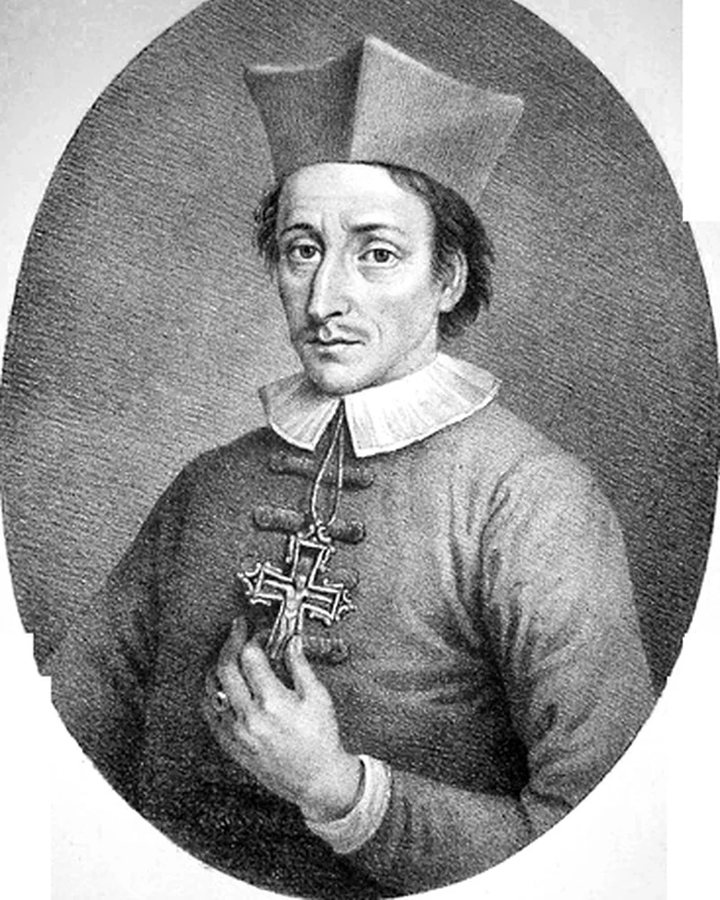 Nicolas StenoBlessed · 1638–1686Nicolas Steno was a 17th-century Danish polymath who made foundational contributions to anatomy and geology before entering the Catholic priesthood. Born in Copenhagen, he traveled extensively through Europe, studying medicine and natural sciences in the Netherlands, France, and Italy. His scientific observations, including the discovery of the parotid salivary gland duct and his research into fossil formation, established him as a pioneer of modern stratigraphy. Later in life, he converted from Lutheranism to Catholicism, eventually serving as a titular bishop and the Apostolic Vicar of Nordic Missions.
 Matthias Grünewald1480–1528Matthias Grünewald was a German Renaissance painter who lived from approximately 1480 until 1528. Unlike many of his contemporaries, he avoided the classical influences of the Renaissance, instead continuing the expressive traditions of late medieval Central European art. His surviving body of work consists entirely of religious subjects, including several significant polyptychs and numerous drawings. He is most famous for his intense, visionary style, which utilizes vivid colors and dramatic forms to convey spiritual themes, most notably in his monumental Isenheim Altarpiece.
 Jakob Böhme1575–1624Jakob Böhme was a German philosopher and Lutheran theologian who lived from 1575 to 1624. Born in a village near Görlitz, he worked as a shoemaker before dedicating himself to mystical writing following profound spiritual visions. His theological works, which explored the relationship between God, humanity, and the cosmos, often sparked controversy among contemporary clergy. Despite facing accusations of heresy, his unique ideas gained significant traction, eventually influencing major intellectual movements like German Romanticism and German idealism.
 Thomas à KempisBlessed · 1380–1471Thomas à Kempis was a 15th-century German-Dutch priest and member of the Canons Regular of Saint Augustine. Born in Kempen, he joined the Congregation of Windesheim, a group associated with the Modern Devotion movement. He is most famous for writing *The Imitation of Christ*, a highly influential devotional text. Throughout his life, he served as a prolific writer and copyist, dedicating much of his time to spiritual instruction and the transcription of sacred manuscripts.
 Saint BonifaceSaint · 675–754Saint Boniface was an 8th-century Benedictine monk and missionary who played a central role in bringing Christianity to the Germanic regions of Francia. Born Winfrid in England, he dedicated himself to monastic life and later traveled to the continent to serve as a missionary bishop. He eventually became the Archbishop of Mainz, working closely with the Carolingian dynasty to reorganize the Frankish Church. Often called the Apostle to the Germans, he is remembered for establishing many church foundations and for his martyrdom in Frisia.
 Saint UrsulaSaint · †385Saint Ursula was a Romano-British princess and martyr who lived during the late 4th century. According to hagiographical tradition, she led a large group of holy virgins on a pilgrimage across Europe. While historical details regarding her life are sparse, she is most famously remembered as the leader of eleven thousand companions who were reportedly killed during a massacre in Cologne. She is venerated as a saint within the Catholic, Eastern Orthodox, and Anglican traditions.
 Frederick III of Saxony1463–1525Frederick III of Saxony, also known as Frederick the Wise, was the Prince-elector of Saxony from 1486 until his death in 1525. He is most famous for providing essential protection to Martin Luther, the central figure of the Protestant Reformation, against the authorities of the Pope and the Holy Roman Emperor. While he remained a Roman Catholic throughout most of his life, he was a significant supporter of the rule of law and the right to a fair trial for his subjects. He also established the University of Wittenberg, which became a vital center for theological study.
 Princess Elisabeth of Hesse and by RhineVenerable martyr · 1864–1918Princess Elisabeth of Hesse and by Rhine was a German princess who later became a Grand Duchess of Russia and an Orthodox nun. Born in Darmstadt in 1864, she was the daughter of Grand Duke Ludwig IV and Princess Alice, a daughter of Queen Victoria. After marrying Grand Duke Sergei Alexandrovich, she became known for her charitable work and her dignified presence in Russian society. Following the assassination of her husband, she transitioned from royal life to religious devotion, establishing a convent to serve the poor before her death in 1918.
 Katharina von Bora1499–1552Katharina von Bora was a German nun and the wife of the reformer Martin Luther, serving as a central figure during the Protestant Reformation. Born around 1499 to minor Saxon nobility, she later escaped her life in a Cistercian convent to marry Luther in 1525. This union established a significant precedent for clerical marriage and the Protestant model of family life. As a manager of her husband's estate and a provider for their household, she played a vital role in the daily operations of the movement's domestic life.